Do Reviews Increase Conversions on Shopify? What the Evidence Says

Yes, reviews increase conversions on Shopify, and the effect is largest where shoppers feel the most risk: higher-priced products and products with few reviews. Research from the Medill Spiegel Research Center reports lifts of up to 270% for products that display reviews. Those are upper-bound figures, though, and the details matter more than the headline. The count, the mix of ratings, the format and the placement all change whether a review reassures a shopper or gets ignored.
This guide covers what the research says, where the numbers come from and which review types do the most work. It also covers how to collect reviews that stay on the right side of US rules, and how to check whether your own store is seeing a lift.
TL;DR
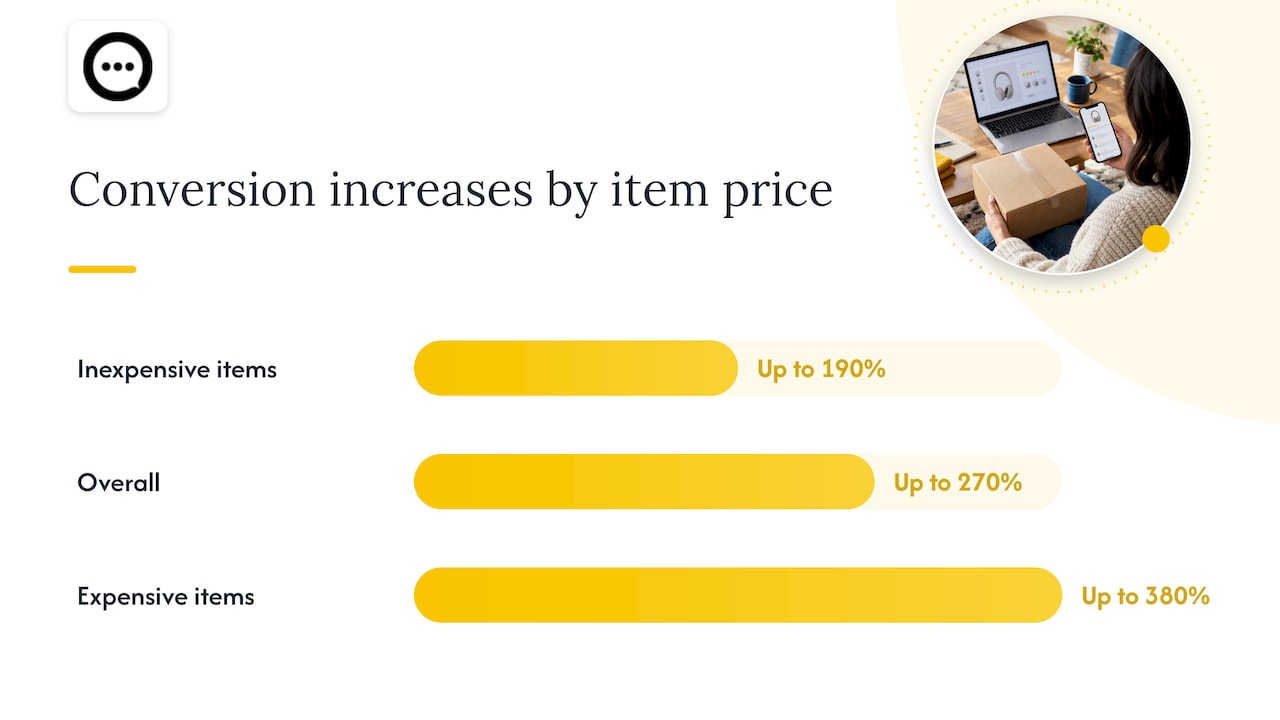
- Displaying reviews can raise conversion by up to 270%, and up to 380% on high-priced items versus 190% on low-priced ones (Medill Spiegel Research Center, 2017).
- The first five reviews on a product deliver the biggest lift. After that, each extra review adds less.
- Trust comes from showing the review count, negative feedback and reviewer context, not from curated praise alone.
- Video reviews and shopper Q&A answer the questions text stars cannot. Collect them with real post-purchase requests and stay inside the FTC’s 2024 rule.
- Measure with before-and-after conversion rates per product, not store-wide averages.
Table of Contents
- What the research says about reviews and conversion
- Why a single star rating is not enough
- Which review formats and placements work best
- How we think about it
- Collecting reviews that are real and compliant
- Peers: video reviews and shopper Q&A for Shopify
- How to tell whether reviews are lifting your conversions
- Common mistakes that waste the lift
- FAQ
- Sources
What the research says about reviews and conversion
The most cited figure comes from the Medill Spiegel Research Center. Its work, summarized in a paper on the value of online customer reviews, found that displaying reviews can increase conversion by up to 270%. The effect was stronger for expensive items, with up to a 380% increase, than for cheap ones, at 190%.
The logic is simple. A $12 phone case is a small gamble, so a shopper needs little proof. A $240 jacket or a $90 skincare set is a bigger gamble, and shoppers look for evidence that someone like them already bought it and was happy.
The same research says the first five reviews provide the most significant lift. After that, marginal gains shrink. For a store owner, this changes the job. You do not need 500 reviews on every product. You need five good ones on every product, starting with your best sellers and highest-priced items.
Reviews build trust, but not for every shopper
A 2016 experimental study (Tatge and McKeever) found that customer-generated reviews positively influence product-related trust and perceptions of how useful a product is. Baymard reports that 95% of users relied on reviews to evaluate products or learn more about them.
There is a counterpoint worth knowing. A study using individual-level consumer journey data found that around 70% of the time shoppers do not read reviews during their online journey. When they do read, content about price and aesthetics can significantly influence whether they buy.
Taken together, these findings point to one conclusion: reviews work as a safety net that many shoppers check only when they feel doubt. Your job is to make that check fast, specific and believable.
Rating valence beats badges
One 2023 experiment on tablets and trip packages found that review valence, meaning how positive or negative the reviews are, had a greater effect on purchase intention than verified-purchase badges or review writing style. A badge helps, but it will not rescue a weak average. Product quality, honest descriptions and fixing the cause of low ratings still come first.
Why a single star rating is not enough
Stars compress an experience into one number. They cannot tell a shopper whether a dress runs small, whether a supplement tastes chalky or whether a gadget is loud. Nielsen Norman Group notes that reviews can give insight into product use that product descriptions may not provide, and can answer specific shopper questions.
That is the gap between a rating and a purchase decision. Shoppers hesitate on questions such as:
- Will this fit someone my size?
- Does it look like the photos in real life?
- How does it hold up after a month?
- Is it worth the price compared with a cheaper option?
A text review sometimes answers one of these. A short video from a verified buyer often answers several at once, and a Q&A thread lets the next shopper ask the exact thing they are unsure about. We cover the difference in more depth in our comparison of video testimonials and text reviews.
Which review formats and placements work best
Show the count, the good and the bad
Trust has to be inspectable. Test users in one study distrusted a five-star average when its count was hidden, so StorePilot recommends showing the rating count beside the average. A 4.8 from 12 reviews and a 4.8 from 1,200 reviews are not the same signal. For a broader look at why the pairing builds credibility, see this overview of online reviews and ecommerce SEO.
NN/g also recommends showing both favorable and negative feedback, clearly differentiated, with sorting or filtering so shoppers can quickly find the best and worst experiences. A wall of curated praise reads as marketing.
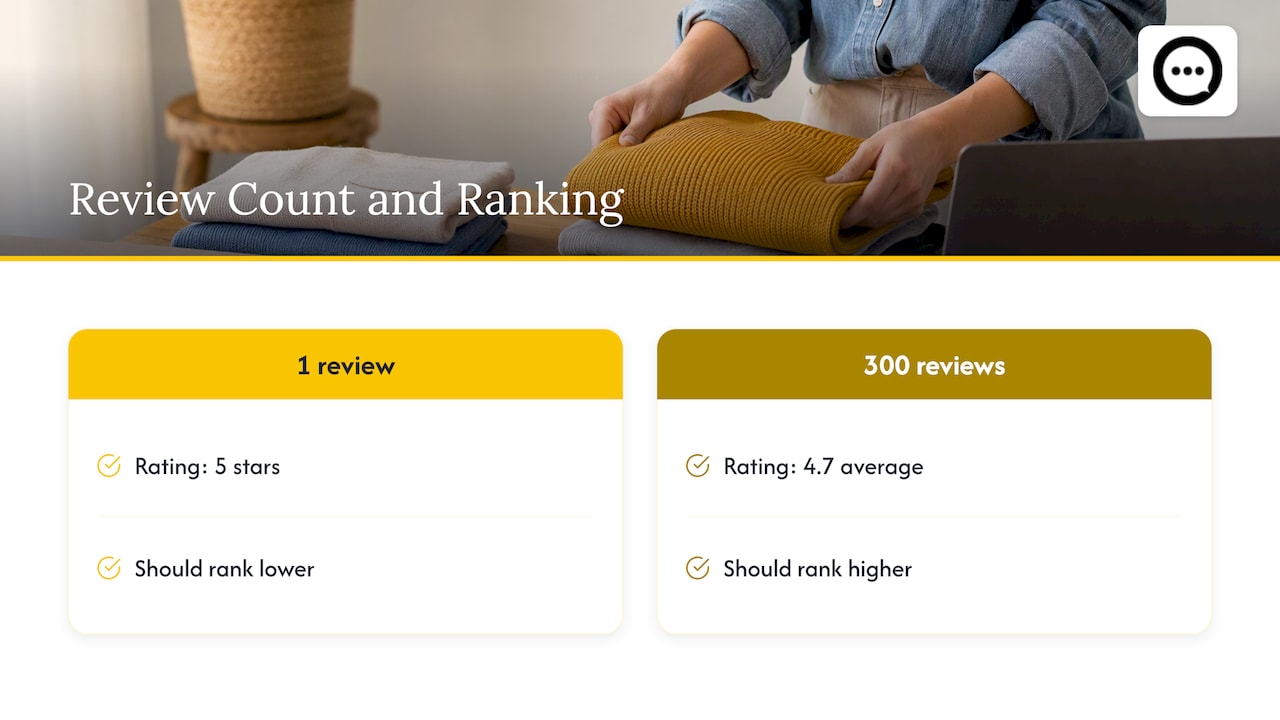
Sorting deserves care too. Baymard’s research found that 64% of sites fail to include the number of ratings in rating-based sorting. A product with a single 5-star review should not outrank one with 300 reviews averaging 4.7.
Give reviews context
NN/g found that reviewer details such as age, size or intended use help shoppers judge whether a review applies to them. A “runs small” comment means little until you know the reviewer’s size. Show those attributes selectively next to each review.
Respond to negative reviews
Baymard found that 80% of sites did not respond to at least some negative reviews, and that users read a response to a negative review as a strong sign of customer service. A calm, specific reply costs you five minutes and can reassure every shopper who reads it later.
Photo and video beat plain text
One industry analysis from MarketingLib reports that shoppers who interact with photo reviews convert at a rate 58% higher than those who do not, and that products with photo reviews show an average 9% lift over text-only. It is a company blog, so treat the numbers as directional rather than a guarantee. It also argues that customer-made photos often outperform polished studio shots, because their imperfection signals authenticity.
Video extends the same idea. A 15 to 20 second clip from a real buyer shows the product in a real kitchen, on a real body, in real light. It is hard to fake and quick to watch.
Do not hide reviews behind a click, but do make them easy to open
A 2023 study found that requiring participants to click to access reviews improved their purchase decisions, bringing perceived value closer to actual quality. The takeaway is not to bury reviews. It is that shoppers who actively engage with reviews decide better, which supports interactive formats such as tappable video and open Q&A over a static block of stars.
Placement on the page
Shoppers should meet proof at the moment of doubt: a rating summary near the title and price, photos and videos near the gallery or description, and the full review and Q&A section below. Our guides on where each review widget piece belongs and five Shopify spots for social proof go through the layout in detail.
How we think about it
We built Peers because most Shopify stores already have stars, yet shoppers still hesitate. The missing piece is usually not more praise. It is a believable answer to a specific question, from someone who actually bought the product.
That is why we focus on two things only: post-purchase video reviews from verified customers, and Q&A between shoppers and those customers, both on the product page. We do it for Shopify only, so setup, moderation and design controls are built around how Shopify stores work.
Our view is to treat reviews as a conversation, not a trophy case. Keep the critical ones visible. Show who is talking. Let a new shopper ask a question and get an answer from a real owner, not a copywriter. Stores that do this tend to give hesitant shoppers a reason to stay on the page. Moderation tools exist so you stay in control of what appears, without deleting honest criticism.
— Leo
Collecting reviews that are real and compliant
The lift from reviews only holds if shoppers believe them, and in the US the law now backs that up. On August 14, 2024, the FTC announced a final rule banning fake reviews. It prohibits creating or selling fake reviews, and buying or spreading them when you knew or should have known they were fake. It also requires clear disclosure of material connections in certain insider reviews and testimonials, and prohibits reviews given by officers or managers.
Two points in the FTC’s questions and answers on the rule matter for Shopify merchants:
- You cannot offer incentives for reviews that are conditioned on a particular sentiment, positive or negative, even if the condition is only implied.
- You cannot use unfounded legal threats, physical threats or intimidation to prevent or remove a negative review.
In practice, that means asking every buyer, not only the happy ones, and never tying a reward to a five-star score. If you want to offer a thank-you, read our guide on rewarding customers for reviews compliantly and the FTC endorsement rules with copy-ready disclosures. This is general information, not legal advice. If you run incentive programs or work with affiliates, check your specific setup with a qualified attorney.
A simple collection routine
- Wait for delivery plus use time. Ask after the buyer has had the product long enough to form an opinion.
- Make it one tap. A QR code on the insert or a link in the follow-up email removes friction. See how it works in three steps from QR code to product page and our note on short verified video reviews with QR codes.
- Keep clips short. 15 to 20 seconds is enough to show the product and one honest opinion.
- Moderate, do not curate. Remove spam and abuse, keep fair criticism.
- Answer questions publicly. Every answered question helps the next shopper.
Peers: video reviews and shopper Q&A for Shopify
If you want this setup without custom theme work, Peers adds verified post-purchase video reviews and shopper Q&A directly to your product pages. It includes moderation tools, customizable design, mobile compatibility and analytics for engagement tracking. There is a Free plan, and Peers Growth is $15 per month. You can read more or install it from the Peers page in the Shopify App Store.
No theme code is needed to embed the widget, as our guide to embedding post-purchase video reviews on Shopify explains.
How to tell whether reviews are lifting your conversions
Store-wide conversion rate is a noisy measure, because traffic mix, discounts and seasons move it. Measure at the product level instead.
- Pick a baseline. Record the conversion rate for your target product pages for the four weeks before you add or change review content.
- Change one thing. Add video reviews or Q&A to a handful of products, and leave similar products as they are.
- Compare like with like. Look at the same traffic sources and similar discount levels across both groups.
- Track engagement. Plays, questions asked and questions answered show whether shoppers are using the content.
- Watch the first five. Given the diminishing returns found in the research, products that move from zero to five reviews should show the clearest change.
Shopify’s own documentation lists the metrics available for Shop product reviews, including collected reviews, conversion rate after review notifications and average rating. Use them alongside your analytics rather than in place of them.
Be realistic about expectations. The 270% and 380% figures are ceilings from research across many products, not forecasts for your store. Roll-out guides from app vendors often cite a 10 to 15% lift from adding reviews, but your result depends on your price point, traffic and starting point. Test it, then decide how much more to invest.
Common mistakes that waste the lift
- Hiding the count. A perfect average with no volume looks suspicious.
- Showing only 5-star reviews. Shoppers notice, and it undermines every other review.
- Burying reviews far below the fold. The doubt appears near the price, so proof should be nearby.
- Ignoring low-review products. Your highest-priced items with the fewest reviews have the most to gain.
- Using summaries as a replacement for reviews. NN/g’s 2025 research says review summaries should expose negative themes and cite the underlying reviews, and that they should supplement, not replace, the original comments.
- Over-incentivizing. Reward schemes tied to sentiment break FTC rules and damage trust.
For a wider view of how reviews fit into the path from visitor to buyer, this piece on sales funnel basics is a helpful companion.
FAQ
How many reviews does a Shopify product need to convert?
The Medill Spiegel Research Center found the first five reviews provide the most significant conversion lift, with smaller gains after that. Aim for at least five on every product, starting with your best sellers and priciest items. Then keep collecting so the count and recency stay credible.
Do reviews help more on expensive products?
Yes. The same research reports up to a 380% conversion increase for high-priced items, compared with 190% for lower-priced ones. Costlier purchases carry more risk, so shoppers look for more proof before they commit.
Are video reviews better than text reviews?
Video shows the product in use and answers questions that stars and short comments cannot. Photo review data from one industry analysis points the same way, although that source is a company blog and not a controlled study. The best setup usually combines text, photo and video with open Q&A.
Can I pay customers for reviews on Shopify?
Not in a way that depends on the sentiment of the review. The FTC’s 2024 rule prohibits incentives conditioned on positive or negative reviews, even implicitly. Offer any thank-you to everyone who submits a review regardless of rating, and talk to an attorney if your program is complex.
How do I know if reviews are working in my store?
Compare conversion rates on specific product pages before and after you add review content, against similar products without it. Track engagement alongside sales. Shopify’s help center also lists review metrics you can use.
Sources
- The Value of Online Customer Reviews
- Assessing the influence of customer reviews on trust and online purchasing behavior
- Baymard: User Reviews Section design examples
- NET Institute: consumer journey and reviews study
- Interaction between extrinsic and intrinsic online review factors
- NN/g: UX Guidelines for Ecommerce Product Pages
- StorePilot: Building Trust and Social Proof on Shopify
- Baymard: Sort with Both Ratings Average and Number of Ratings
- MarketingLib: Photo Reviews vs. Text Reviews
- Study on clicking to access consumer reviews (AIS, 2023)
- NN/g: AI Summaries of Reviews
- FTC: Final Rule Banning Fake Reviews
- FTC: Consumer Reviews and Testimonials Rule Q&A
- Shopify Help Center: Shop product review metrics